
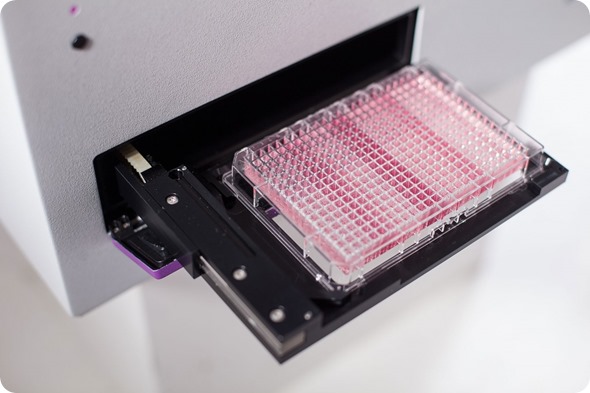
In the world of drug discovery and molecular biology, scientists rely on technologies that can capture interactions at an incredibly small scale. One such technology is Homogeneous Time-Resolved Fluorescence, better known as HTRF. It has become a cornerstone for laboratories studying protein interactions, enzyme activity, GPCR signaling, biomarkers, and many other biochemical pathways. At the heart of these experiments is a specialized device called the htrf plate reader, designed to detect the faint yet highly informative fluorescent signals produced during these assays.
HTRF combines the principles of fluorescence resonance energy transfer with time-resolved detection. This hybrid approach significantly reduces background noise, making it easier to distinguish real molecular interactions from random fluorescence. As a result, HTRF assays offer high sensitivity, reproducibility, and robustness, which are essential qualities for screening potential drug compounds or studying complex cellular processes.
How HTRF Works at a Deeper Level
The technique uses a donor and acceptor fluorophore pair. When the donor molecule is excited at a specific wavelength, it transfers energy to the acceptor only if the two molecules are in close proximity. This proximity-dependent signal makes HTRF particularly powerful for studying how molecules bind, separate, or change conformation in real time.
Time-resolved detection further improves accuracy. Instead of measuring the fluorescence immediately, the reader waits a brief moment to collect the signal. This delay allows short-lived background fluorescence to fade, leaving behind a cleaner and more specific measurement.
Why Specialized Readers Are Necessary
HTRF assays may look straightforward on paper, but accurately detecting their signals requires very specific instrumentation. A suitable reader needs to excite the donor at the right wavelength and capture two separate emission signals, often both within the same measurement cycle. Not all microplate readers have this capability, which is why dedicated devices have been developed to support TR-FRET and HTRF technologies.
A high-performance htrf plate reader should offer:
- Strong sensitivity to detect weak signals without introducing noise
- Precise wavelength control for excitation and emission
- Dual-emission detection for ratiometric analysis
- Compatibility with multiple plate formats, especially for high-throughput assays
- Software capable of handling standard curves, ratiometric calculations, and kinetic evaluations
These elements help researchers generate consistent, reliable data, which is crucial when screening hundreds or thousands of experimental conditions.
Applications That Benefit From HTRF Technology
One of the major strengths of HTRF is its versatility. The technology is widely used in:
- Protein-protein interaction studies
- Receptor-ligand binding assays
- Enzyme kinetics and inhibitor screening
- Biomarker quantification in cell lysates
- High-throughput screening programs in pharmaceutical development
Because HTRF assays are homogeneous, they do not require washing steps. This reduces hands-on time and minimizes variability, making the technique well-suited to both small research labs and high-throughput screening facilities.
A Tool That Continues to Evolve
HTRF has been around for decades, yet the instrumentation and assay design continue to evolve. Advances in excitation sources, detector technologies, and microplate formats allow researchers to push for even greater sensitivity and speed. As new molecular targets emerge in fields like immuno-oncology, neurobiology, and precision medicine, HTRF remains a reliable method for uncovering how potential therapeutics behave at the molecular level.
For researchers interested in exploring the capabilities of HTRF-compatible instruments, more detailed information can be found here:
https://www.bmglabtech.com/en/htrf-microplate-reader/


More Stories
Voyage of the Cosmic Echoes: A Sci-Fi Odyssey Beyond the Event Horizon
The Next Dimension: Imagining the Cities of Tomorrow
The Quantum Echoes of Tomorrow