

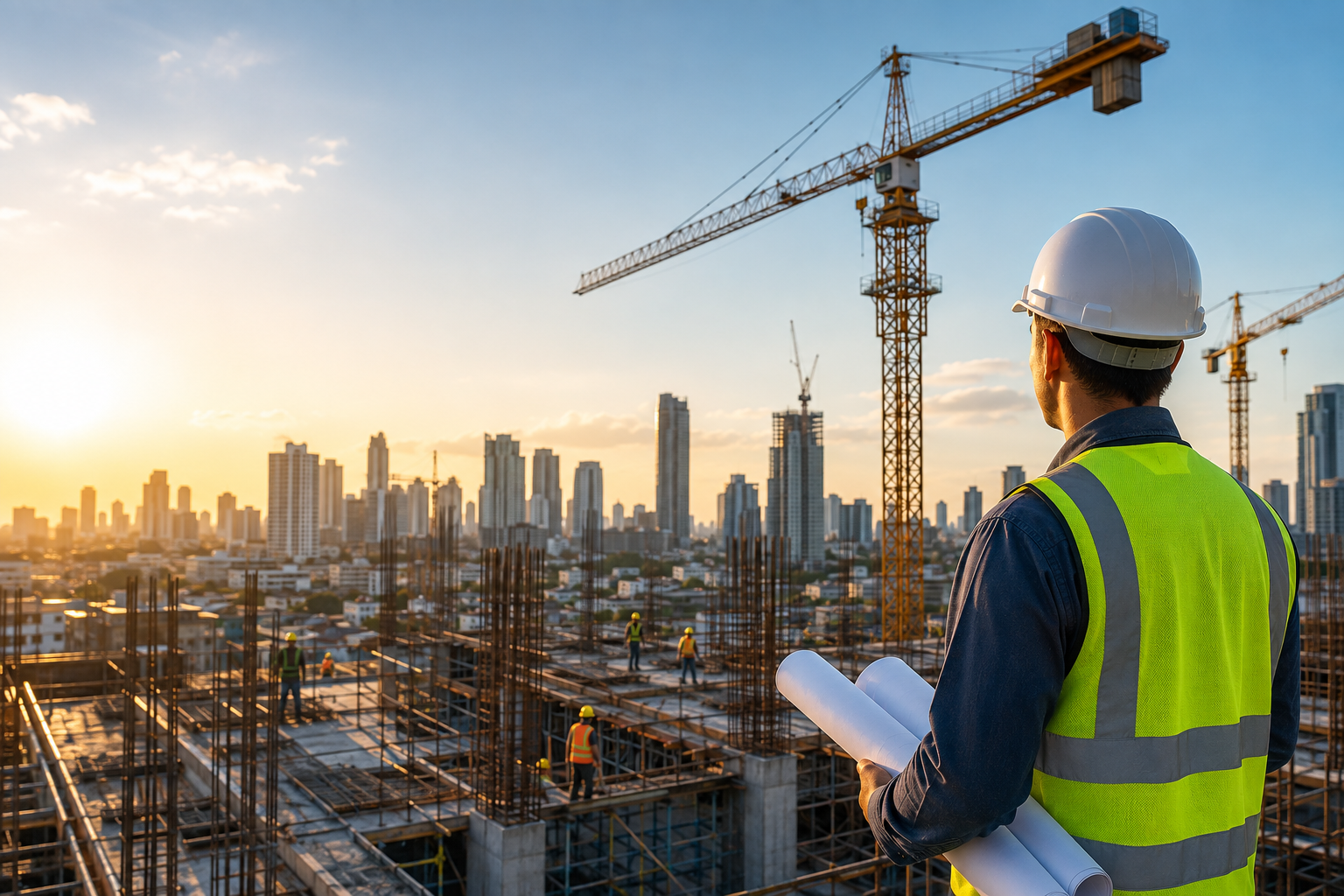
The Hidden Blueprint: Reimagining School Structure for Future Minds
Education stands at a crossroads. The industrial-era model of schooling, designed to churn out standardized workers for an assembly-line economy, no longer aligns with the needs of the 21st century. A child born today will enter a world shaped by artificial intelligence, climate change, and rapid technological disruption—yet most schools still operate as if the 20th century’s challenges persist. The question is no longer whether the system is broken, but how to redesign it from the ground up. What if schools were not merely places of instruction, but laboratories for curiosity, resilience, and lifelong adaptability? This article explores a radical yet practical blueprint for reimagining school structure to nurture the minds of tomorrow.
The Case for Radical Reform
Current educational structures are deeply rooted in hierarchy and efficiency. Students move through rigid grade levels at the same pace, absorbing pre-packaged information in isolated subjects. While this model once ensured consistency, it now stifles creativity and fails to account for individual differences in learning speed, style, and passion. Research from cognitive science tells us that learning is not linear—it thrives on exploration, failure, and personal connection. Yet conventional schools often treat these as disruptions rather than essential components of growth.
Consider the paradox: we teach children to think critically in science class but rarely let them question the structure of school itself. We celebrate innovation in entrepreneurship but rarely apply it to the institutions meant to foster it. The result? A generation that excels at standardized testing yet struggles with real-world problem-solving, emotional intelligence, and self-directed learning.
Core Principles of a New Model
To build a better system, we must start with foundational principles that reflect the nature of human learning and the demands of the modern world. These are not just theoretical ideals—they are actionable guidelines that can reshape how we educate young people.
- Student-Centered Design: Learning journeys must be personalized. Every student has unique strengths, interests, and timelines. Schools should adapt to learners, not the other way around.
- Interdisciplinary Thinking: The world’s greatest challenges—climate change, inequality, AI ethics—cannot be solved within a single discipline. Schools must integrate subjects to mirror real-life complexity.
- Experiential Immersion: Knowledge sticks when it is applied. Learning should happen through projects, apprenticeships, and real-world challenges, not just textbooks and lectures.
- Autonomy and Agency: Students thrive when they have ownership over their learning. Choice, voice, and responsibility should be embedded in daily school life.
- Emotional and Social Development: Intelligence is not just IQ—it includes emotional regulation, empathy, collaboration, and resilience. These skills must be taught explicitly and practiced daily.
Structural Innovations: Breaking the Mold
With these principles in mind, we can reimagine school structure at every level—from the classroom to the calendar. Here’s how:
1. Flexible, Modular Learning Pathways
Instead of fixed grade levels, schools could adopt a competency-based progression. Students advance by demonstrating mastery of skills and knowledge, not by age or seat time. This allows for acceleration in areas of strength and support where needed. Imagine a 12-year-old mastering algebra in six months while spending the rest of the year immersed in a community-based sustainability project. This approach is already gaining traction in places like Finland and parts of the U.S. through “competency-based education” models.
Schools could operate on a rolling enrollment system, where new students join year-round, and cohorts form based on interest and readiness rather than arbitrary birth years. This fosters a culture of mentorship and peer learning, where older students guide younger ones, and teachers act as facilitators rather than lecturers.
2. The Rise of Micro-Schools and Learning Pods
Large, centralized schools are becoming obsolete. Instead, micro-schools—small, community-based learning environments—are emerging as powerful alternatives. These can be public, private, or hybrid, often run by educators, parents, or social enterprises. They allow for deeply personalized learning, strong mentor relationships, and tight-knit communities.
Learning pods, where small groups of students (often siblings or neighbors) collaborate under the guidance of a facilitator, have also surged in popularity, especially post-pandemic. These models reduce bureaucracy, lower costs, and put learning back into the hands of families and communities. Some districts are even funding pods as part of public education, recognizing their potential to innovate within the system.
3. Project-Based and Real-World Learning
Classrooms should resemble innovation labs more than lecture halls. Project-based learning (PBL) immerses students in authentic challenges—designing a community garden, creating a podcast on local history, or prototyping a solution to reduce food waste. These projects integrate multiple subjects: math for budgeting, science for sustainability, writing for communication, and social studies for civic engagement.
Partnerships with local businesses, nonprofits, and universities can provide real-world contexts for learning. Students might intern with a tech startup, conduct oral histories with elders, or develop a marketing plan for a local farmer’s market. These experiences build not just academic knowledge, but confidence, professional skills, and civic identity.
4. The Four-Day School Week and Learner-Driven Calendars
The traditional five-day, six-hour school day is outdated. Many schools are experimenting with a four-day week, using the fifth day for deeper learning, mentorship, or community engagement. Others are adopting year-round schedules with frequent breaks to prevent burnout and allow for intersession projects.
Even more radical is the concept of learner-driven calendars. Schools could operate on a trimester or semester system where students choose when to focus deeply on certain topics. A student passionate about marine biology could spend a month studying coastal ecosystems, while another explores computer programming through game design. Flexibility in time mirrors the real world, where deadlines and projects vary in urgency.
5. Teacher as Coach, Not Lecturer
In this new model, teachers are no longer the sole source of knowledge—they are designers of learning experiences, mentors, and guides. Professional development should focus on facilitation, project design, and emotional intelligence coaching. Teachers need time to collaborate, observe students in action, and iterate on their approaches.
This shift also redefines assessment. Instead of high-stakes standardized tests, evaluation should be continuous, authentic, and reflective. Portfolios, public presentations, peer reviews, and self-assessments can replace or supplement traditional grading. The goal is to measure growth, not just compliance.
The Role of Technology and AI
Technology is often blamed for distracting students, but it can also be a powerful ally in personalized learning. Adaptive learning platforms can tailor content to each student’s pace and level, freeing teachers to focus on mentorship. AI can help identify learning gaps, suggest resources, and even simulate real-world challenges for students to solve.
However, technology should never replace human connection. The most effective schools will use digital tools to enhance learning without sacrificing the warmth of teacher-student relationships. Virtual reality could transport students to ancient Rome for a history lesson, but the discussion afterward—led by a passionate educator—is where real learning happens.
Overcoming Barriers to Change
Reimagining school is not without challenges. Resistance often comes from policy makers clinging to outdated accountability measures, teachers overburdened with administrative tasks, and parents conditioned to equate success with grades and test scores. Here’s how to navigate these obstacles:
- Policy Reform: Advocate for competency-based standards, eliminate seat-time requirements, and fund alternative models through public education budgets.
- Teacher Empowerment: Provide teachers with autonomy, time for professional growth, and leadership opportunities in school design.
- Parent Education: Help families understand that success isn’t measured solely by test scores but by creativity, adaptability, and well-being. Share stories of thriving graduates from alternative schools.
- Community Partnerships: Engage local organizations, businesses, and universities to co-create learning opportunities and share resources.
The Future is Already Here
Reimagining school is not a distant dream—it’s already happening. Schools like High Tech High in San Diego, Sudbury Valley in Massachusetts, and the Big Picture Learning network across the U.S. are proving that student-centered, experiential education works. Countries like Finland and Estonia have dismantled traditional grading systems in favor of holistic assessment. Even corporate giants like Google and Microsoft have shifted hiring practices to value skills like collaboration and problem-solving over degrees.
But transformation requires more than isolated experiments—it demands a cultural shift. We must move from a system that asks, “How can we get students to fit into the school?” to one that asks, “How can the school adapt to nurture each student?” This is not about tearing down the old system, but building something new alongside it—one that values humanity over efficiency, depth over breadth, and growth over grades.
Conclusion: A Blueprint for Tomorrow’s Minds
Reimagining school is not just about changing structures—it’s about changing mindsets. It’s about trusting young people to lead their own learning, about valuing curiosity as much as compliance, and about preparing them not just for careers, but for life. The blueprint exists. It’s woven into the principles of human development, the demands of a changing world, and the dreams of educators and families who refuse to accept the status quo.
What we need now is the courage to build it. Not in a decade, not in a generation—but today. Because the future minds of our world aren’t waiting. They’re here. And they’re ready to learn.

More Stories
Redefining Tomorrow: The Innovative School Structures Shaping Future Generations
Reimagining Schools: Building Creative Structures for Tomorrow’s Learners
Reimagining the Classroom: Innovative School Structures for the 21st Century Learner